Asbestos in Your Switchboard: How to Tell and What Replacing It Involves in Melbourne | Electrx Electricians
Many older homes across Melbourne’s western suburbs still have their original meter board and switchboard. Asbestos backing boards in old meter boxes are not uncommon across the west. The Victorian Asbestos Hub advises minimising disturbance of any material you suspect contains asbestos, because cutting, drilling, sanding or breaking it can release fibres into the air. Replacing an old switchboard means that panel has to come off the wall, so it needs planning before any electrical work starts.
This guide explains how to tell whether your switchboard is likely to have an asbestos backing, why you can’t confirm it just by looking, who is allowed to remove it in Victoria, and what replacing an asbestos switchboard involves from the first inspection to the new board.
The short version
- If your home was built or renovated before 1990, the Victorian Government’s Asbestos Hub says it likely contains asbestos.
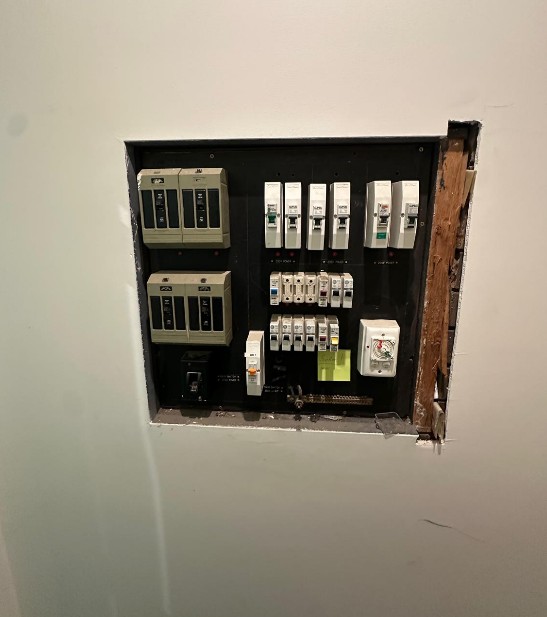
- Old switchboard and meter panels were often made from an asbestos and resin or asbestos and pitch board that is dark brown or black.
- Only laboratory testing of a sample can confirm asbestos. Looking at the panel is not enough.
- Asbestos removal is done by a licensed asbestos removalist. Electricians generally aren’t licensed to remove it.
- Once the asbestos panel is removed, a licensed electrician installs the new switchboard and issues a Certificate of Electrical Safety.
How Common Is an Asbestos Switchboard in Older Melbourne Homes?
An asbestos switchboard is common in homes of a certain age. The Victorian Asbestos Hub page on where asbestos is found says that if your home or building was built or renovated before 1990, it likely contains asbestos. The same page lists electrical cupboards among the places asbestos turns up, alongside roof sheets, eaves and the wall linings behind bathroom tiles.
The national Asbestos Product Guide entry for electrical fuse and meter board backing, published by the Asbestos and Silica Safety and Eradication Agency, says most of these panels were installed before 1990. It lists meter boxes as their residential use.
Our switchboard upgrades page makes the same point for local homes. Asbestos backing boards were commonly used in meter boxes in homes built before the mid 1980s, and they are not uncommon across Melbourne’s western suburbs.
How to Tell If Your Switchboard Might Have an Asbestos Backing Board
You can spot the signs of an asbestos switchboard from a safe distance, but you can’t confirm it that way. The Asbestos Product Guide describes the old panels as usually dark brown or black, with a rough fibrous or wood like surface, and sometimes a strong tar smell. These boards were made from an asbestos and resin or an asbestos and coal tar pitch composite.
Signs that point to an older, possibly asbestos backed board include:
- A dark brown or black backing panel behind the meter and fuses
- Ceramic fuses or rewirable wire fuses instead of circuit breakers
- No safety switches on the board
- An older electro mechanical meter, whose front cover the Asbestos Product Guide says may have been sealed with asbestos compounds
- Brown or black Bakelite fittings, which the Asbestos Product Guide says were often made with asbestos content
The Asbestos Product Guide also lists brand names used on these boards, including Zelemite, Lebah, Miscolite, Ausbestos, Dilex, New Dilex and Ringgrip. It notes that the brand name may appear on the back of the panel, which you can’t see without taking the board off the wall.
Please don’t open up the board, scratch the panel or try to read the back of it. A switchboard is live electrical equipment, and the Asbestos Product Guide warns that meter boxes fitted with these panels may hold friable asbestos dust and debris inside. If your board has ceramic fuses and no safety switches, you can read more about why that matters in our guide to switchboards with no safety switches.
Can You Confirm Asbestos in a Switchboard Just by Looking?
No. The Victorian Asbestos Hub guide to identifying asbestos safely says only a NATA accredited laboratory can confirm whether a material contains asbestos. A dark panel with a fibrous surface is a strong hint, but the Asbestos Hub says you cannot confirm asbestos just by looking at a material.
The Asbestos Hub lists the professionals who can assess suspect materials. They include asbestos surveyors, hazardous materials consultants, occupational hygienists and some building surveyors with specific asbestos identification training. If asbestos is confirmed and the material will be disturbed by planned work, the Asbestos Hub says to engage a licensed asbestos removalist.
The other option is to treat the panel as asbestos from the start. The Victorian Asbestos Hub guidance for builders and trades says that if a building was built or renovated before 1990, trades should assume asbestos is present until proven otherwise. It also says that once you engage someone to work on your home, the home becomes their workplace, and they must identify asbestos that is likely to be disturbed.
Who Is Allowed to Remove an Asbestos Switchboard Panel in Victoria?
A licensed asbestos removalist removes the asbestos panel. The Victorian Asbestos Hub page for homeowners and renovators says plainly that your builder, electrician or plumber generally isn’t licensed to remove asbestos, and that the law heavily restricts what they can do.
The Asbestos Hub explains that friable asbestos needs a Class A licensed removalist, while non friable asbestos can be removed by a Class A or Class B licensed removalist.
The Asbestos Hub’s safe removal steps describe what the removalist manages:
- WorkSafe is notified before the removal begins
- The work area is sealed off and signposted, and neighbouring properties are notified
- The removalist uses wet methods, containment and protective equipment to stop fibres escaping
- An asbestos surveyor who is independent of the removalist inspects the area afterwards
- You receive a clearance certificate confirming the area is safe to reoccupy
Electrx is a licensed electrical contractor, not an asbestos removalist. Our switchboard team works with certified asbestos removal partners, and we install the new fire rated, compliant switchboard once the asbestos panel has been removed.
What Replacing an Asbestos Switchboard Involves, Step by Step
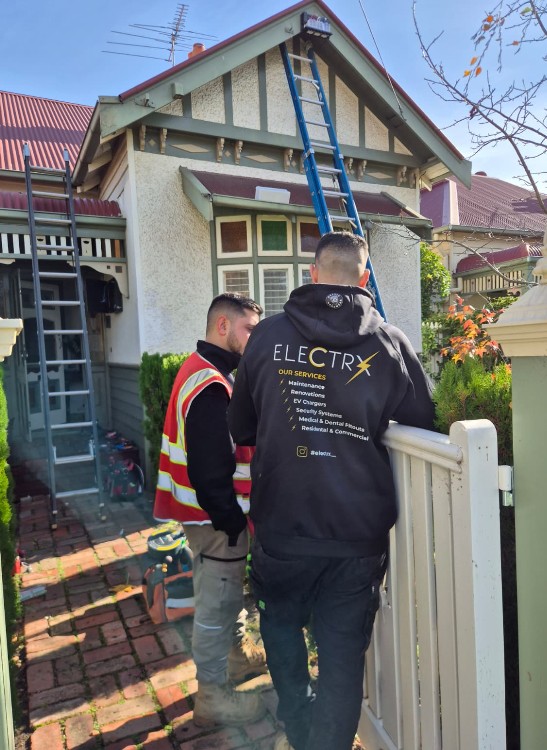
Replacing an asbestos switchboard combines two kinds of work: asbestos removal by a licensed removalist and electrical work by a licensed electrician. Here is how the switchboard replacement usually runs for a home in Melbourne’s west.
Step 1: An electrician inspects the switchboard
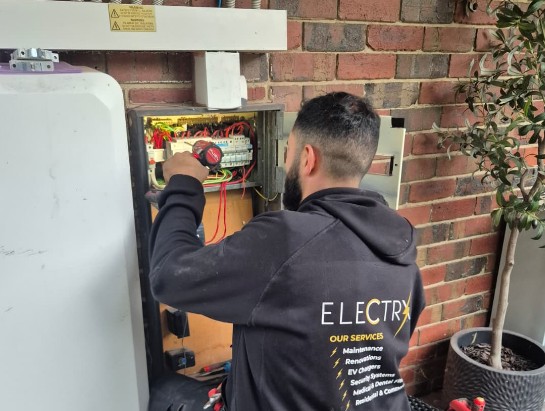
A licensed electrician looks at the board, the meter panel, the fuses or breakers and the wiring feeding it. Our switchboard team identifies a suspect asbestos backing during this first assessment and advises you on the next steps. The electrician also works out what the new board needs, such as safety switches on every circuit and room for any extra circuits you are planning.
Step 2: The panel is tested or treated as asbestos
If there is any doubt about the backing board, the next step is a sample tested by a NATA accredited laboratory, or a decision to treat the panel as asbestos. Either way, nobody should drill or cut the panel until that is settled.
Step 3: A licensed removalist removes the asbestos panel
The removalist removes the asbestos panel under their licence and follows the WorkSafe notification, containment and disposal requirements. The Asbestos Hub says the removalist arranges lawful disposal of all asbestos waste, and asbestos must never go in a skip or a household bin.
Step 4: The electrician installs the new switchboard
With the old panel gone, the electrician fits the new switchboard. Under AS/NZS 3000, the Wiring Rules, a compliant upgrade includes safety switch protection on power and lighting circuits, circuit breakers matched to the cables, clear labelling, and proper earthing and bonding. Our switchboard upgrade costs guide explains what changes the price of the electrical work.
Step 5: You receive a Certificate of Electrical Safety
Energy Safe Victoria describes the Certificate of Electrical Safety as a legal document issued by a Registered Electrical Contractor or licensed electrician to record the electrical work they performed. The contractor must give a copy to the customer and to Energy Safe. Electrx holds Registered Electrical Contractor licence 31135 with Energy Safe Victoria.
What If You Can’t Replace the Asbestos Switchboard Straight Away?
Sometimes a homeowner needs time to plan or budget for the switchboard replacement. The Victorian Asbestos Hub page on what to do if you can’t remove it now says removal is always the goal, because asbestos materials keep breaking down over time even when nobody touches them.
While you wait, the Asbestos Hub recommends these steps:
- Don’t drill, cut, sand or scrub the panel, and don’t hit it with high pressure water
- Keep furniture, equipment and foot traffic away from the meter box so nothing knocks the panel
- Don’t paint or seal over the panel, because coating it hides the problem and makes removal harder
- Check the panel now and then for cracking, weathering or water damage
- Tell tradies, contractors and tenants where the asbestos is before they start any work
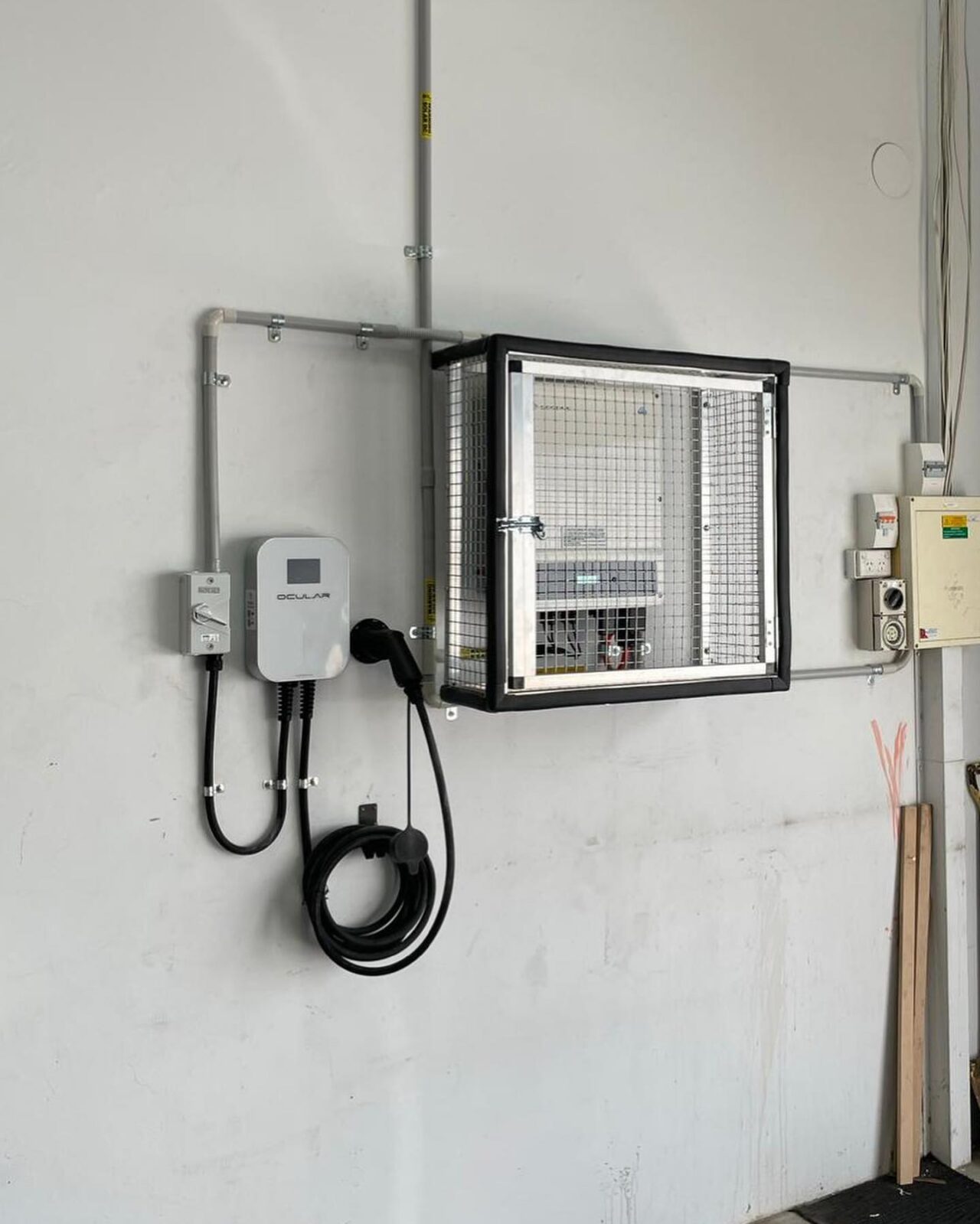
The Asbestos Hub also says removal becomes more urgent if the material is damaged or cracked, or if renovation or maintenance work will disturb it. Adding solar, an EV charger or a three phase supply usually means work at the switchboard, so plan the asbestos panel into that project from the start.
When an Old Asbestos Switchboard Needs Replacing Sooner
An old switchboard needs attention sooner if you notice burn marks or discolouration on the board, fuses that keep blowing, or a board that trips when a few appliances run at once. Those faults are electrical problems in their own right, whether or not the backing panel contains asbestos.
A Powercor defect notice can also flag an outdated meter box, and our guide to the Powercor electrical defect notice explains what that notice means and what to do next. If you have bought an older home and want to know the condition of the switchboard and wiring, an electrical safety check gives you a written record of what was found. Homes that still have old cotton covered wiring often need more than a new board, so read our guide to cotton wiring in older homes and our house rewiring page.
Book a Switchboard Inspection for Your Older Home With Electrx Electricians
Electrx Electricians is based in Brooklyn and works across Melbourne’s western suburbs, from the CBD out to Sunbury. If your home has an old dark meter panel and ceramic fuses, we will inspect the switchboard, point out a suspect asbestos backing, and explain the order of work with our certified asbestos removal partners before we install your new board.
Call us on 0447 139 493 or contact Electrx Electricians to book a switchboard inspection. You can also read more about our switchboard upgrades in Melbourne’s western suburbs.
Frequently Asked Questions About Asbestos Switchboards
How do I know if my switchboard has asbestos in it?
A dark brown or black backing panel with a rough fibrous surface in a home built or renovated before 1990 is a strong sign. The only way to confirm it is laboratory testing of a sample by a NATA accredited laboratory, so ask a qualified asbestos assessor or treat the panel as asbestos.
Is an asbestos switchboard dangerous?
The Victorian Asbestos Hub says to minimise disturbance of suspect asbestos materials, because cutting, drilling, sanding or breaking them can release fibres into the air. The Asbestos Product Guide also warns that meter boxes with these panels may contain friable asbestos dust inside, so don’t open up the board or touch the panel yourself.
Can an electrician remove an asbestos switchboard backing board?
Generally not. The Victorian Asbestos Hub says builders, electricians and plumbers generally aren’t licensed to remove asbestos. A licensed asbestos removalist removes the asbestos panel, and a licensed electrician then installs the new switchboard. Electrx works with certified asbestos removal partners for this part of the switchboard replacement.
Can I keep my old switchboard if it has an asbestos backing?
The Asbestos Hub says removal is always the goal, and its steps for the meantime buy you time, not safety. Don’t paint or seal over it, check it for cracks or weathering, and plan the replacement before any solar, EV charger or renovation work at the board.
Do I get a certificate after my switchboard is replaced?
Yes, you get two. After the asbestos panel is removed, the Asbestos Hub says you receive a clearance certificate confirming the area is safe to reoccupy. After the new switchboard is installed, the electrician issues a Certificate of Electrical Safety, which Energy Safe Victoria describes as a legal document recording the electrical work.

Our Services
Get A Quote
Contact us today for all your electrical needs.