For Melbourne parents with crawlers, toddlers or curious primary-school kids in the house, and anyone who wants a clear, age-appropriate way to teach them about electricity without the scare tactics.
Short answer: The four things that matter most are working safety switches (RCDs) on every circuit, child-shutter powerpoints (or covers as a stopgap), good cord management, and an age-appropriate conversation that grows with your child. Anything inside the switchboard or behind the wall is licensed electrical work, DIY is illegal in Victoria.
If you’ve got little ones crawling around or toddlers who think powerpoints are the most interesting thing in the house, you’re not alone. Kids are curious. That’s their job. Your job is making sure the house isn’t working against them.
Electrical safety at home doesn’t need to be complicated. Most of it comes down to a few smart habits, some cheap fixes you can grab from Bunnings, and knowing when to get an electrician in to sort the stuff you can’t (and legally shouldn’t) touch yourself.
Here’s what actually matters.
Start With Safety Switches They’re Non-Negotiable
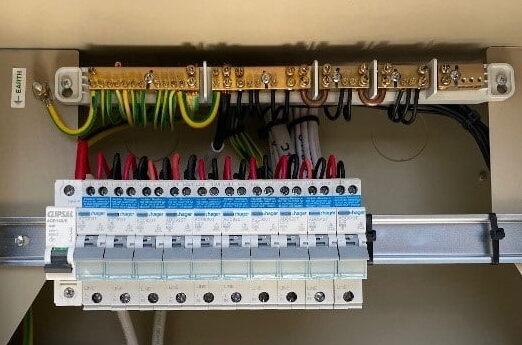
Short answer: Press the test button on every safety switch every three months. It should trip immediately. If it doesn’t, or your switchboard doesn’t have RCDs on every circuit, including lighting, book an electrician. Installing or replacing them is licensed work, but testing them is just pressing a button.
Safety switches (RCDs) are the single most important electrical safety device in your home. If something goes wrong, a kid sticks something in a powerpoint, a faulty appliance, water gets where it shouldn’t, the safety switch cuts the power in milliseconds. Fast enough to prevent a fatal shock.
Here’s the thing though: safety switches can fail. They’ve got a test button on them for a reason.
What you should do:
- Press the test button on your safety switches every three months. It should trip immediately. If it doesn’t, call an electrician.
- If your switchboard doesn’t have safety switches on every circuit (some older homes only have them on power circuits, not lighting), get an electrician to add them. It’s a straightforward job, see our switchboard upgrade page.
- If your switchboard still has ceramic fuses or an old fuse box, that’s a bigger conversation, but it’s worth having.
You can test safety switches yourself. That’s just pressing a button. But installing, replacing, or adding them? That’s licensed electrical work. No exceptions.
Powerpoint Covers And Outlet Plugs
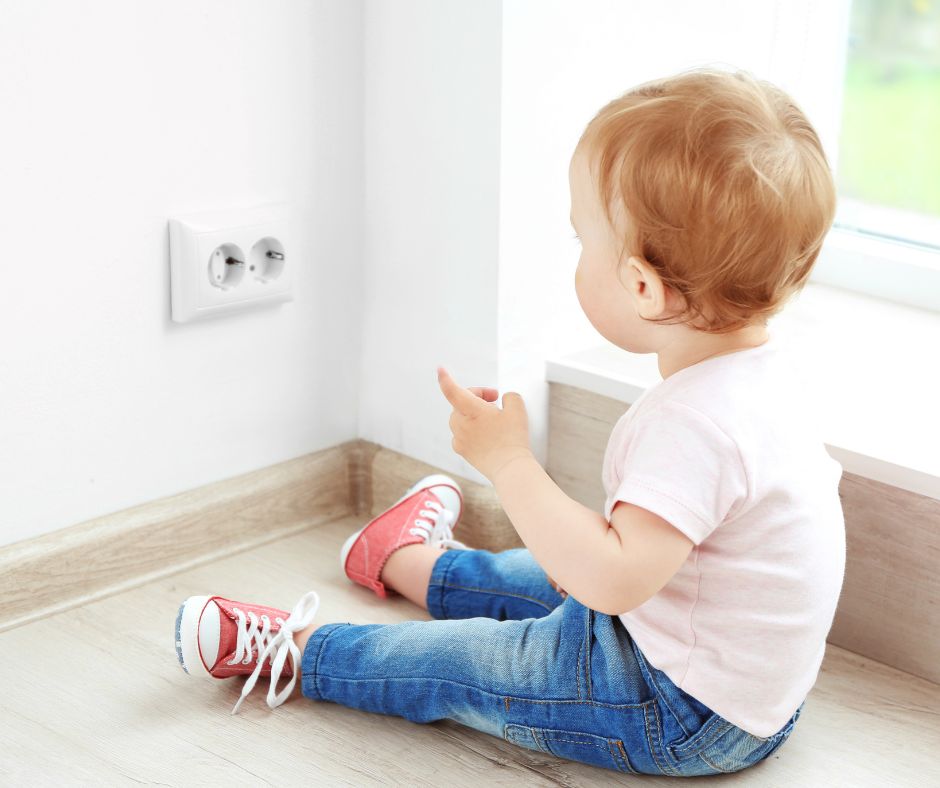
Short answer: Cheap plug-in covers are fine for babies and toddlers, but get the flush type that needs adult grip, push-in versions can become choking hazards. Better long-term fix: powerpoints with built-in child-safety shutters, swapped in by a licensed electrician.
This one’s dead simple. Those little plastic powerpoint covers cost next to nothing and they stop small fingers (and forks, and keys, and whatever else your kid has found) from going where they shouldn’t.
A few things to keep in mind:
- Get the kind that sit flush and need an adult’s grip to remove. The cheap ones that just push in can become choking hazards if a determined toddler pulls them out.
- If you’ve got powerpoints that are cracked, discoloured, or feel warm to the touch, don’t just cover them. Get them replaced. A warm powerpoint is a sign something’s not right behind the wall, and that’s a fire risk.
- Consider getting powerpoints with built-in shutters installed. They’re a one-and-done solution, no covers to lose, no choking risk, and they look tidy. An electrician can swap them over fairly quickly.
Cord Management The One Everyone Forgets
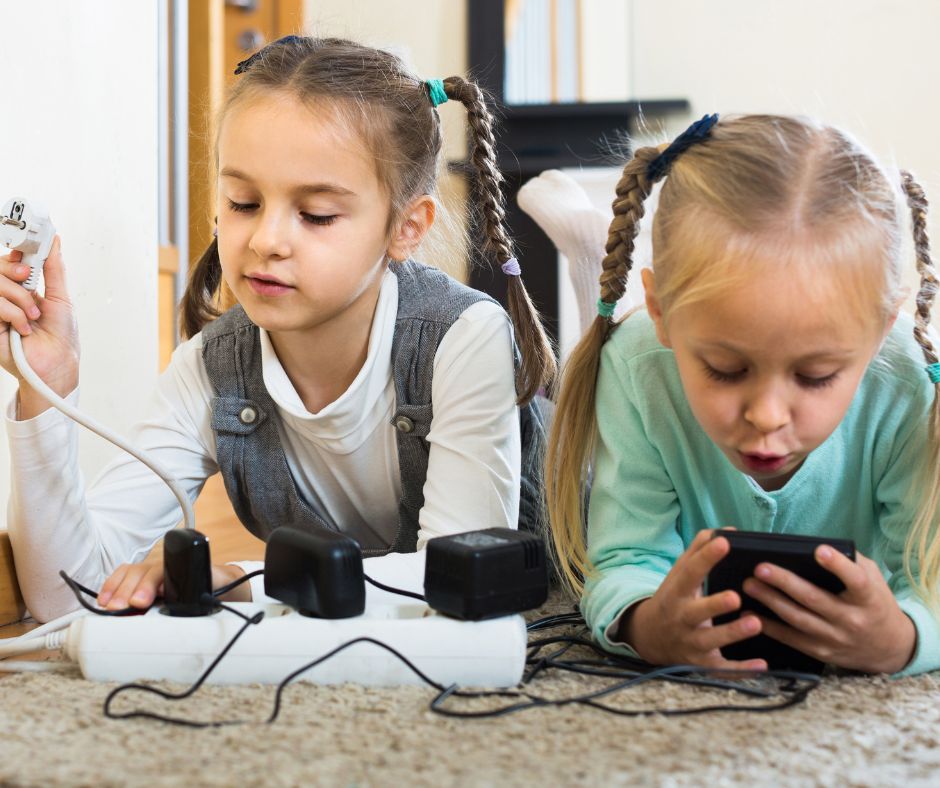
Short answer: Hanging cords are toddler pull-toys waiting for a kettle to come down on someone’s head. Shorten them, run them behind furniture, never daisy-chain powerboards, and if you’re permanently relying on extension leads, you need more powerpoints installed.
Kids pull things. Cords hanging off benchtops are basically an invitation.
This isn’t just about electrical safety, it’s about kettles full of boiling water, toasters, and anything else heavy sitting on a bench with a cord dangling within reach.
Practical fixes:
- Use cord shorteners or wind up excess cord so there’s nothing loose hanging down.
- Run cords behind furniture where possible, not across walkways.
- Don’t use extension leads as a permanent solution. If you need more powerpoints in a room, get in touch and we’ll install them properly.
- Check cords regularly for damage, fraying, exposed wires, melted plastic. A damaged cord is a shock and fire risk. Replace the appliance or get the cord professionally repaired.
And while we’re on the topic, powerboards stacked on powerboards (daisy chaining) is a hard no. It overloads the circuit and it’s a fire hazard. If you’re running out of spots, you need more powerpoints installed.
Teaching Kids About Electricity
Short answer: Match the message to the age. Toddlers: “no touch” and physical barriers. Preschoolers: simple cause-and-effect. Primary school: water + electricity rules, sparking-appliance rules. Older kids: teach them to test safety switches and recognise daisy-chain risks.
You can childproof the house all you want, but kids grow up. They start plugging things in themselves. They visit other people’s houses that aren’t childproofed. So at some point, they need to understand the basics.
Keep it age-appropriate:
- Toddlers (1-3): “No touch” is about all you’ve got here. Redirect them away from powerpoints and cords consistently. Covers and physical barriers do the heavy lifting at this age.
- Preschoolers (3-5): Start explaining that electricity can hurt. “Electricity helps us, but it can give you a very bad owie if you touch it the wrong way.” Simple cause and effect.
- Primary school (5-10): They can understand more. Talk about water and electricity not mixing. Explain why they shouldn’t poke things into powerpoints. Teach them what a sparking appliance means (unplug it, tell an adult). Show them where the switchboard is and what it does.
- Older kids (10+): Teach them how to test safety switches. Explain what “double adaptor vs powerboard” means and why daisy chaining is dangerous. If they’re using power tools for school projects, supervise and teach proper cord handling.
The goal isn’t to scare them. It’s to make sure they respect electricity the same way they learn to respect roads and water.
Outdoor Electrical Safety For Kids
Short answer: Pool electrics must be installed by a licensed electrician and on an RCD, water and mains is the combination you never want. Keep an eye on cracked outdoor light fittings and exposed cables. Trees near power lines are off-limits. Fallen lines after storms, stay back, ring 000.
Backyards have their own set of risks, especially in Australia where kids spend half their lives outside.
Watch out for:
- Pool areas: All electrical work around pools has strict compliance requirements. If you’ve got outdoor powerpoints, lighting, or pumps near the pool, make sure they’ve been installed by a licensed electrician and are on a safety switch. Water and electricity is the combination you never want.
- Garden lights and water features: Low-voltage garden lights are generally low risk, but mains-voltage outdoor lighting needs to be properly installed and weatherproofed. If a fitting is cracked or a cable is exposed, keep the kids away and get it sorted.
- Overhead power lines: If you’ve got tall trees near power lines, teach older kids that climbing those trees is off limits. And if a ball or a kite lands on a power line, leave it. Call the energy provider.
- Storm safety: Teach kids to come inside during lightning. And if they see a fallen power line after a storm, stay well back and call 000.
When To Call An Electrician For Safety Upgrades
Short answer: Anything inside the switchboard, behind the wall, near a pool, or involving outdoor circuits = licensed electrician. DIY electrical work is illegal in Victoria, voids insurance, and is a leading cause of preventable house fires.
Some of this stuff you can handle yourself, testing safety switches, fitting powerpoint covers, managing cords. But a lot of the meaningful safety upgrades need a licensed electrician.
Call an electrician when you need to:
- Add safety switches to circuits that don’t have them
- Upgrade an old switchboard
- Replace damaged or discoloured powerpoints
- Install additional powerpoints (so you can ditch the extension leads)
- Install powerpoints with built-in child safety shutters
- Add outdoor powerpoints or lighting, especially near pools
- Fix any wiring issue, flickering lights, tripping circuits, buzzing sounds, warm switches
In Victoria, all electrical work must be carried out by a licensed electrician. It’s not a suggestion, it’s the law under Energy Safe Victoria. DIY electrical work is illegal, dangerous, and will void your insurance. You can verify a tradesperson’s licence on the Energy Safe Victoria licence register.
If something doesn’t look right or you’re not sure whether it’s a problem, just get it checked. A quick inspection is a lot cheaper than a house fire.
FAQ: Kids And Electrical Safety At Home
How often should I test my safety switches?
Every three months. Just press the test button on your switchboard, it should trip straight away and you reset it by flicking it back. If it doesn’t trip, call an electrician because the switch may have failed.
Are powerpoint covers enough to keep my child safe?
They’re a good start for babies and toddlers, but they’re not the whole solution. Safety switches, cord management, and teaching kids about electricity as they grow up are all part of it. And if your powerpoints are old, cracked, or warm to the touch, covers won’t fix the underlying issue, you need those powerpoints replaced.
Can I install safety switches myself?
No. Safety switch installation is electrical work, which must be done by a licensed electrician in Victoria. You can test them yourself (just press the button), but installation, replacement, and any work inside your switchboard is for a licensed sparky only.
What should I do if my child gets an electric shock?
Turn off the power source if you can do so safely, switch it off at the powerpoint or the switchboard. Don’t touch the child while they’re still in contact with the electrical source. Call 000 immediately. Even if your child seems fine after a shock, take them to a doctor. Some effects of electrical shock aren’t immediately obvious.
At what age should I start teaching my kids about electrical safety?
Start as early as you can in an age-appropriate way. For toddlers, that’s simply “no touch” and redirection. By the time they’re in primary school, they can understand that electricity is dangerous and learn basic rules like not using appliances near water. There’s no age where you can stop, the conversations just get more detailed as they get older.
How do I know if my home’s wiring is safe for kids?
If your home is older (pre-2000), there’s a decent chance your switchboard needs attention, it may not have safety switches on all circuits, or the wiring may be aging. The best way to know is to get an electrical safety inspection. An electrician can check your switchboard, wiring, powerpoints, and give you a clear picture of what’s fine and what needs work.
Are smart powerpoints safer for homes with kids?
Smart powerpoints can add a layer of convenience, you can turn them off remotely, set schedules, and monitor usage. But they don’t replace safety switches or proper wiring. Think of them as a bonus, not a substitute for the fundamentals.
Is it worth getting a full electrical safety inspection?
Yes, especially if you’ve just moved into a home, you’ve got an older property, or you’ve never had one done. An electrician can pick up issues you’d never spot yourself, things behind walls, inside the switchboard, or in the roof cavity. Peace of mind is worth a lot when you’ve got kids running around.
When This Article Isn’t For You
- You’re outside metro Melbourne. We cover inner-west and central Melbourne suburbs, different city, different electrician.
- You want to do the electrical work yourself. Not happening. DIY mains-voltage work is illegal in Victoria and voids your home insurance.
- You’re after a one-off cheap callout with no inspection. We’re a licensed Melbourne electrician with insurance, not the cheapest in the phone book.
Keep Your Home Safe For The Whole Family
You don’t need to be an electrician to keep your kids safe around electricity, but you do need one for the work that actually matters. Testing safety switches, fitting covers, tidying cords, and teaching your kids the basics will go a long way.
If you’re not sure whether your home is as safe as it could be, or you’ve been meaning to get the switchboard looked at, give us a call. We’ll come out, have a look, and give you a straight answer on what needs doing.
What Others Are Reading:


Our Services
Get A Quote
Contact us today for all your electrical needs.